



When an industrial lubricant manufacturer enters Amazon, they typically do one thing: upload product photos, fill in the bullet points, set a price, and wait. What they discover within weeks is that waiting produces nothing except a listing that looks identical to two hundred competitors selling the same viscosity grade at a lower margin. Amazon A+ Content for industrial lubricant brands exists precisely to break that pattern. It is the single most powerful conversion tool available to brand-registered sellers on the platform, capable of lifting sales by up to ten percent according to Amazon’s own published benchmarks, and significantly more when executed with the visual discipline that industrial buyers actually respond to. This article explains what A+ Content is, why most industrial brands use it incorrectly, and how lubricant manufacturers can deploy it as a genuine brand-building asset rather than a decorative afterthought on a product detail page.
There is a particular kind of frustration that lubricant manufacturers experience when they first enter Amazon. A technically superior product, years of formulation expertise, and competitive pricing behind every SKU. And still, the listing sits there generating modest traffic that converts at rates that would embarrass a well-run physical distributor.
The problem is rarely the product. It is the page.
Amazon is a visual decision environment. Buyers arrive with intent already formed: they know they need a gear oil, a hydraulic fluid, a high-temperature grease. What they do not know, in most cases, is which brand to trust. And in the absence of a trusted brand relationship, they default to the most recognizable name or the lowest price. For industrial lubricant manufacturers without the budget of Shell or Castrol, that dynamic is a structural disadvantage unless they do something to change it.
The standard product detail page offers very little space to change it. A title, five bullet points, a handful of images, and a plain text description. That is the same real estate every competitor has. On those terms, differentiation is nearly impossible, and price becomes the only remaining variable.
Amazon A+ Content, formally known as Enhanced Brand Content, replaces the plain text description section of a product detail page with a structured visual module system. Brand-registered sellers can build layouts combining high-quality images, comparison charts, feature callouts, technical specification tables, and brand story sections. Premium A+ Content, available to sellers with five or more approved standard submissions, adds full-width imagery, video modules, and interactive hotspot graphics.
The result is a product page that no longer looks like a commodity listing. It looks like a brand.
Amazon describes the sales uplift from A+ Content as up to ten percent per listing, though the actual impact is highly category-dependent and best measured per SKU over a minimum of thirty days against a comparable baseline. For industrial lubricant brands where average order values are meaningful and repeat purchase cycles are long, even a modest improvement in conversion rate compounds significantly over a twelve-month period. Nova Analytics
Data from 2026 confirms that among the highest-impact conversion improvements on Amazon, A+ Content consistently appears as a primary lever: the three to five ASINs responsible for sixty to seventy percent of conversion losses on high-traffic pages are almost always missing A+ Content entirely. Test
The manufacturers who understand this stop treating A+ Content as a design task and start treating it as a commercial decision. In Part 2, we will examine exactly what that looks like in practice for a lubricant brand competing in a crowded digital marketplace.

Most lubricant brands that have A+ Content on their Amazon listings made the same mistake in building it. They treated it as a digital brochure. They took their existing catalogue assets, resized them for Amazon’s module dimensions, wrote some feature callouts about viscosity grades and temperature ranges, and published the result. The page looks better than a plain text listing. But it does not do what A+ Content is actually capable of doing for an industrial brand.
The distinction matters because A+ Content text is not indexed by Amazon’s search algorithm. It contributes nothing to keyword ranking or organic discovery. Its only function is conversion. Every module, every image, every line of copy exists to answer one question in the buyer’s mind: why this brand, not the one above or below it on the search results page.
For industrial lubricant brands, that question has a specific structure. The buyer is not an impulse purchaser. A workshop owner, fleet manager, or procurement specialist is making a decision that directly affects equipment reliability and operational continuity. Understanding the application, confirming the product performs as described, and trusting that the supplier will be there for the next reorder: these are the three things that determine whether a buyer chooses your brand or moves on.
Generic feature modules do not answer those questions. Strategic A+ Content does.
The most effective A+ Content for industrial lubricant brands is built around a single organizing principle: demonstrate that you understand the buyer’s operating environment better than your competitors do.
This means moving beyond specification tables and into application context. Instead of listing a viscosity index and leaving the buyer to interpret it, show what that viscosity index means for a hydraulic system operating in a cold northern European climate. Instead of stating an API certification, explain which equipment manufacturers recognize that certification and why it matters for warranty compliance.
Amazon’s published benchmark places A+ Content sales uplift at up to ten percent, with the real-world impact highly category-dependent and best measured per SKU. For industrial lubricants, where the purchase decision involves higher stakes and longer evaluation cycles than consumer products, the brands that structure their A+ Content around buyer confidence rather than product features consistently outperform those that do not. Nova Analyti

Premium A+ Content includes a Brand Story module that appears across all of a seller’s product listings simultaneously. Most industrial brands either skip it entirely or fill it with generic corporate language about quality commitments and customer focus.
This is one of the most significant missed opportunities in industrial Amazon selling.
The Brand Story module allows sellers to connect with customers by sharing the brand’s mission, values, and history — and for an industrial lubricant manufacturer with genuine expertise and a track record, that story is far more compelling than most brands realize. Buyers on Amazon are not just purchasing a product. They are choosing a supplier relationship. A Brand Story module that communicates specific industry knowledge, decades of formulation experience, or a clear positioning in a particular application segment builds the kind of credibility that makes a buyer pause before defaulting to the familiar name above yours in the search results. Salesduo
Data from 2026 confirms that the highest-impact conversion improvements on Amazon consistently point to A+ Content as a primary lever, with the ASINs responsible for the majority of conversion losses on high-traffic pages almost always missing it entirely. For industrial lubricant brands entering Amazon seriously, the Brand Story module is not optional infrastructure. It is the difference between a product page and a brand presence. Test
In Part 3, we will examine how to structure A+ Content specifically for the industrial lubricant context: what to show, what to avoid, and how to measure whether the investment is actually working.
Understanding what A+ Content can do and knowing how to build it correctly are two different things. Most industrial brands that invest in A+ Content production fail at the structural level: they assemble modules without a deliberate sequence, mix technical and commercial messaging in ways that create confusion, and produce pages that look busy rather than authoritative. The result is a page that communicates effort without communicating confidence.
Effective A+ Content for industrial lubricant brands follows a deliberate information architecture. Each module earns its position by answering a specific question the buyer is asking at that point in their evaluation process. The sequence matters as much as the content.
The opening module carries the highest weight. It is what the buyer sees first when they scroll past the bullet points, and it sets the interpretive frame for everything that follows. For industrial lubricant brands, the opening module should not lead with a product feature. It should lead with an application statement: a clear, specific declaration of what operating environment this product was built for and what problem it solves inside that environment.
A hydraulic oil designed for cold-climate construction equipment should open with that context, not with a viscosity index. A gear oil formulated for heavy-load marine applications should establish that operating environment in the first visual. This immediately signals to the right buyer that they are in the right place, and to the wrong buyer that they should keep looking, which is equally valuable because it protects conversion rate quality.
The second module should establish technical authority. This is where a well-constructed comparison chart performs at its strongest. Industrial buyers evaluate products against alternatives, and giving them a structured comparison within your own A+ Content controls that evaluation rather than leaving the buyer to navigate competitor pages independently. The comparison should be honest and specific: performance categories where your product leads, application contexts where it is optimized, certifications that matter to the target buyer segment.

The two most common structural failures in industrial A+ Content are worth naming directly because they appear consistently across the category.
The first is specification overload. Industrial brands default to data because data feels authoritative. But a page dense with viscosity tables, flash point figures, and pour point measurements without interpretive context reads as a technical datasheet, not a brand page. Datasheets belong in the product documentation section. A+ Content should translate specifications into operating implications: what this number means for the buyer’s equipment, in their application, under their conditions.
The second failure is brand language that has no industrial grounding. Phrases like “industry-leading quality” and “trusted by professionals worldwide” appear on thousands of Amazon listings in every category. They communicate nothing because they claim everything. Industrial buyers, who evaluate suppliers with the same rigor they apply to equipment procurement, filter this language out immediately. Every claim in A+ Content should be specific, verifiable, and connected to an operating reality the buyer recognizes.
Amazon’s Manage Your Experiments tool allows brand-registered sellers to run controlled A/B tests on A+ Content against existing listings. The honest measurement standard is conversion rate per SKU before and after publication, tracked for a minimum of thirty days against a comparable control period. Amazon’s published benchmark of up to ten percent sales uplift is a ceiling, not a guarantee, and the actual impact for any given SKU depends on traffic quality, competitive context, and how well the content is constructed.
For industrial lubricant brands entering Amazon as a new channel, the more useful framing is not “how much will A+ Content increase my conversion rate” but rather “without A+ Content, how much of my potential conversion rate am I leaving unrealized.” Given that the feature is free for brand-registered sellers and that high-traffic industrial listings without it consistently show up as the primary conversion loss point in 2026 platform data, the question answers itself.
In Part 4, we will bring these threads together, examine what a complete Amazon presence looks like for a serious industrial lubricant brand, and address the ten questions manufacturers ask most often before committing to this channel.
Amazon does not reward passive participation. Industrial lubricant brands that enter the platform without a clear brand strategy end up in the same place every time: competing on price.
A+ Content is the most immediate tool for changing that dynamic. It works best as part of a coherent approach to how your brand presents itself in a digital marketplace that your buyers are already using.
The manufacturers who build strong Amazon presences share a common understanding. Amazon is not a warehouse catalogue. It is a branded retail environment where first impressions determine whether a buyer investigates further or moves on.
Every visual decision on a product detail page contributes to or detracts from perceived professionalism. The hero image, the Brand Story module, the comparison chart layout: each one sends a signal.
A lubricant manufacturer that has invested years in formulation and certification deserves better than a generic product page. Allowing that gap to persist is a commercial decision with real consequences.
The buyer who encounters your product on Amazon and moves on is not just a lost transaction. In B2B industrial categories where repeat purchase cycles are long, that first impression shapes a relationship that could have lasted years.
A+ Content closes the gap between product quality and digital representation. It is not a substitute for a strong product, competitive pricing, or reliable supply.
In a marketplace where your product sits alongside competitors with similar specifications and lower prices, it is often the deciding variable. Done correctly, it is among the highest-return brand investments available to a lubricant manufacturer entering digital channels in 2026.
Amazon A+ Content is an enhanced product description feature available to brand-registered sellers on Amazon. It replaces the standard plain text description with structured visual modules including images, comparison charts, feature callouts, and brand story sections. Any seller enrolled in Amazon Brand Registry can access Basic A+ Content at no cost. Premium A+ Content becomes available after submitting five or more approved Basic A+ pages within a twelve-month period.
Amazon’s published benchmark places the potential sales uplift at up to ten percent per listing. The actual impact is highly category-dependent and should be measured per SKU over a minimum of thirty days. For industrial lubricant brands with meaningful average order values and long repeat purchase cycles, even modest conversion improvements compound significantly over time. Brands that structure their content around buyer confidence rather than generic features tend to see stronger results.
No. A+ Content text is not indexed by Amazon’s search algorithm and contributes nothing to keyword ranking or organic discovery. Its function is exclusively conversion: turning existing traffic into purchases. SEO on Amazon is addressed through title optimization, backend keywords, bullet points, and advertising strategy, all of which are separate from A+ Content.
Basic A+ Content provides access to standard modules: text overlays, image headers, feature comparison charts, and product description grids. Premium A+ Content adds full-width imagery, interactive hotspot modules, video content, and enhanced navigation elements. Premium access is free but requires five approved Basic submissions within the previous twelve months, along with a completed Brand Story submission.
The opening module should lead with an application statement rather than a product feature. For industrial lubricant brands, this means clearly establishing what operating environment the product was built for and what problem it solves in that context. This immediately signals relevance to the right buyer and protects conversion rate quality by filtering out buyers whose application the product does not serve.
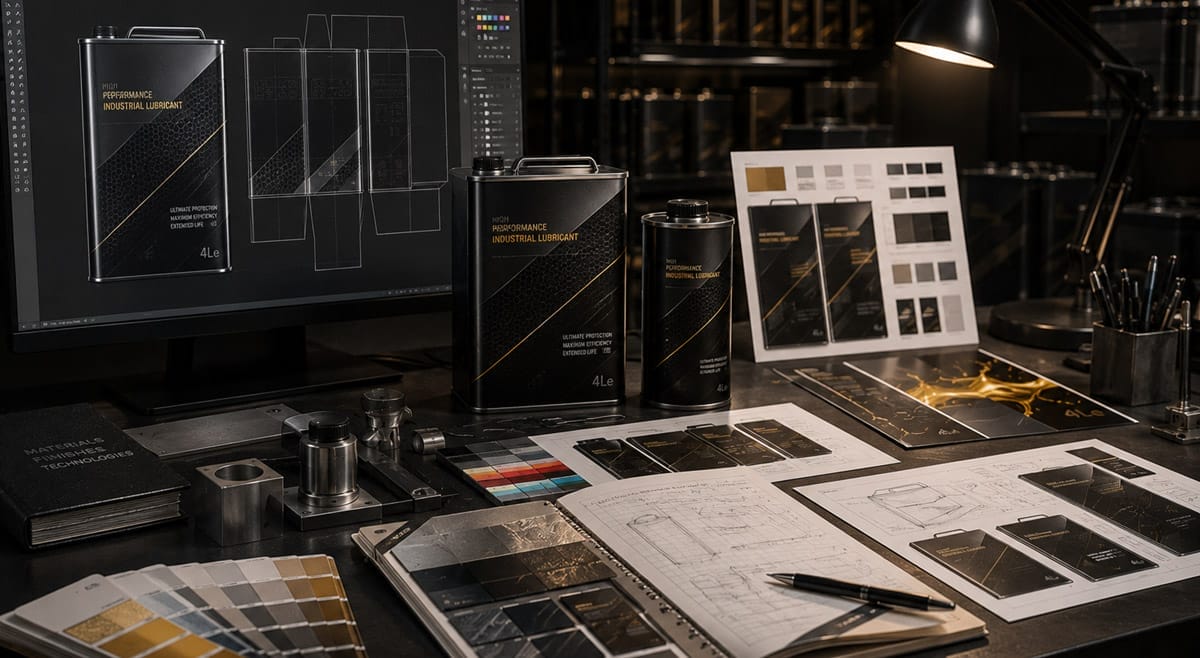
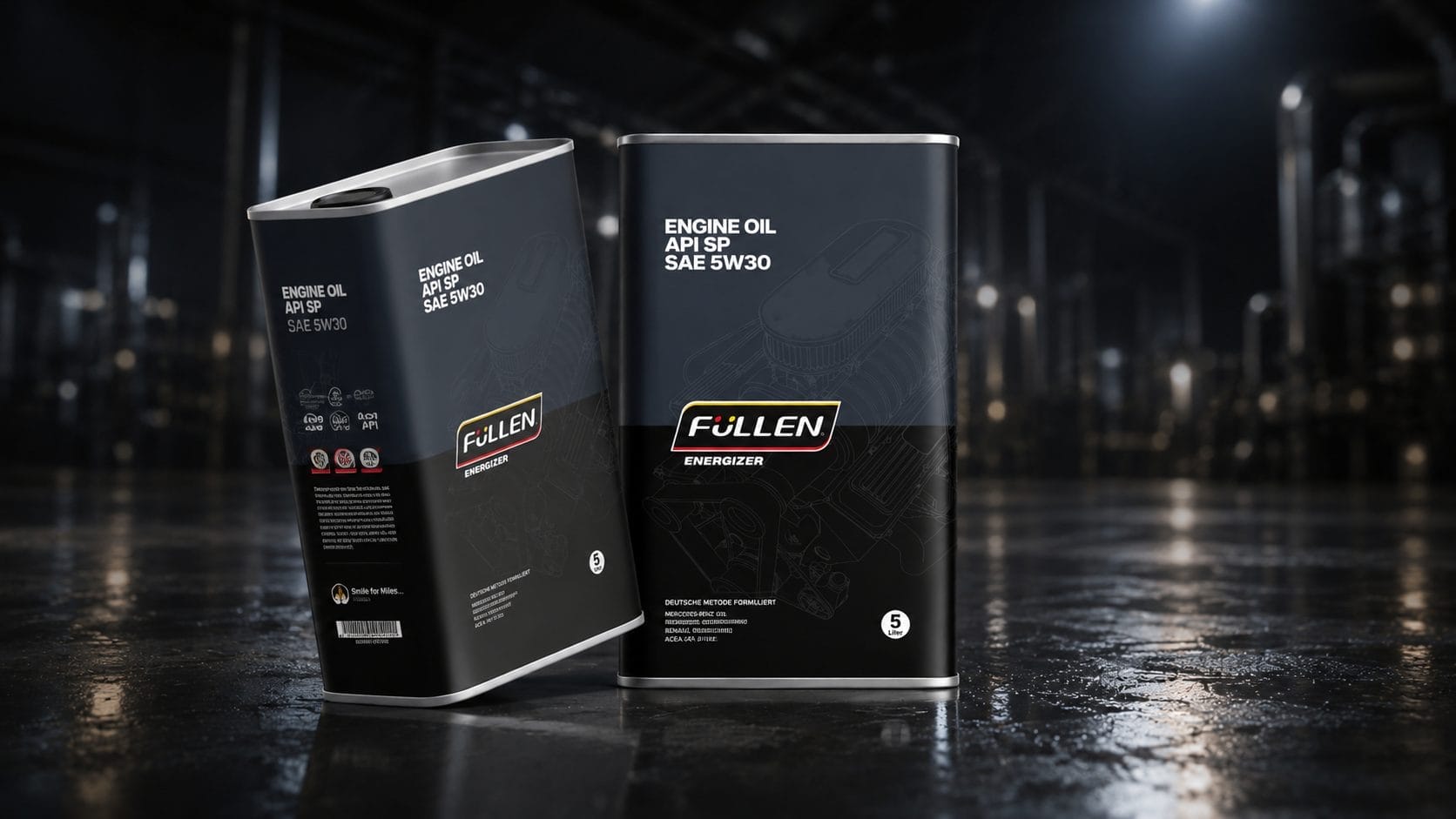
A+ Content and physical packaging serve different stages of the same brand experience. Physical packaging creates the first impression at the point of physical contact: on a distributor shelf, in a trade show environment, or in a buyer’s hands. A+ Content creates the first impression in the digital evaluation stage, before a physical product is ever seen. The strongest industrial brands ensure visual consistency across both, so buyers who encounter the brand online and then receive the physical product experience the same level of design discipline at every touchpoint.
Yes, and this is one of the most significant strategic opportunities for independent industrial lubricant manufacturers. Large brands like Castrol and Shell rely on name recognition to carry their Amazon presence. A smaller brand with well-executed A+ Content that demonstrates specific application expertise, clear technical authority, and a coherent brand identity can compete effectively in niche segments where the larger brands offer generic positioning.
A+ Content should be reviewed when a product formulation changes, when new certifications are obtained, when the product expands into new application segments, or when conversion data indicates the current content is underperforming. Annual reviews are a reasonable standard for stable product lines. Amazon’s Manage Your Experiments tool allows controlled testing of updated content against existing versions.
At minimum: a high-quality hero image of the product in context, lifestyle or application imagery showing the product in its operating environment, brand identity assets including logo files and color specifications, and technical data translated into visually communicable formats. The quality of these assets directly determines the quality of the final A+ Content, which is why brands that invest in professional industrial photography and packaging design before entering Amazon consistently outperform those that use existing catalogue assets.
Not universally. Amazon performs best for industrial lubricant brands with products in the automotive, small fleet, workshop, and MRO segments where purchase decisions are made by individuals or small teams with relatively short evaluation cycles. For brands selling exclusively to large industrial accounts through long-cycle B2B procurement processes, Amazon may serve better as a brand visibility channel than a primary sales channel. The strategic question is not whether to be on Amazon, but how to be represented there in a way that reflects the brand’s actual positioning.
Most industrial lubricant manufacturers we work with at Jahanifar Studio arrive at the same realization: their product quality is not the problem. Their brand representation is. Whether that representation lives on a physical can in a distributor’s warehouse or on a product detail page on Amazon, the same principle applies. A brand that looks like it knows what it is doing earns the attention its product deserves. A brand that looks generic competes on price until the margin is gone. Jahanifar Studio helps lubricant and industrial manufacturers build the visual identity, packaging systems, and digital brand assets that close the gap between product quality and brand perception, across every channel where their buyers make decisions.
Explore our work or contact us to start your project at jahanifar.com
Let's discuss your goals and explore the best path forward.