




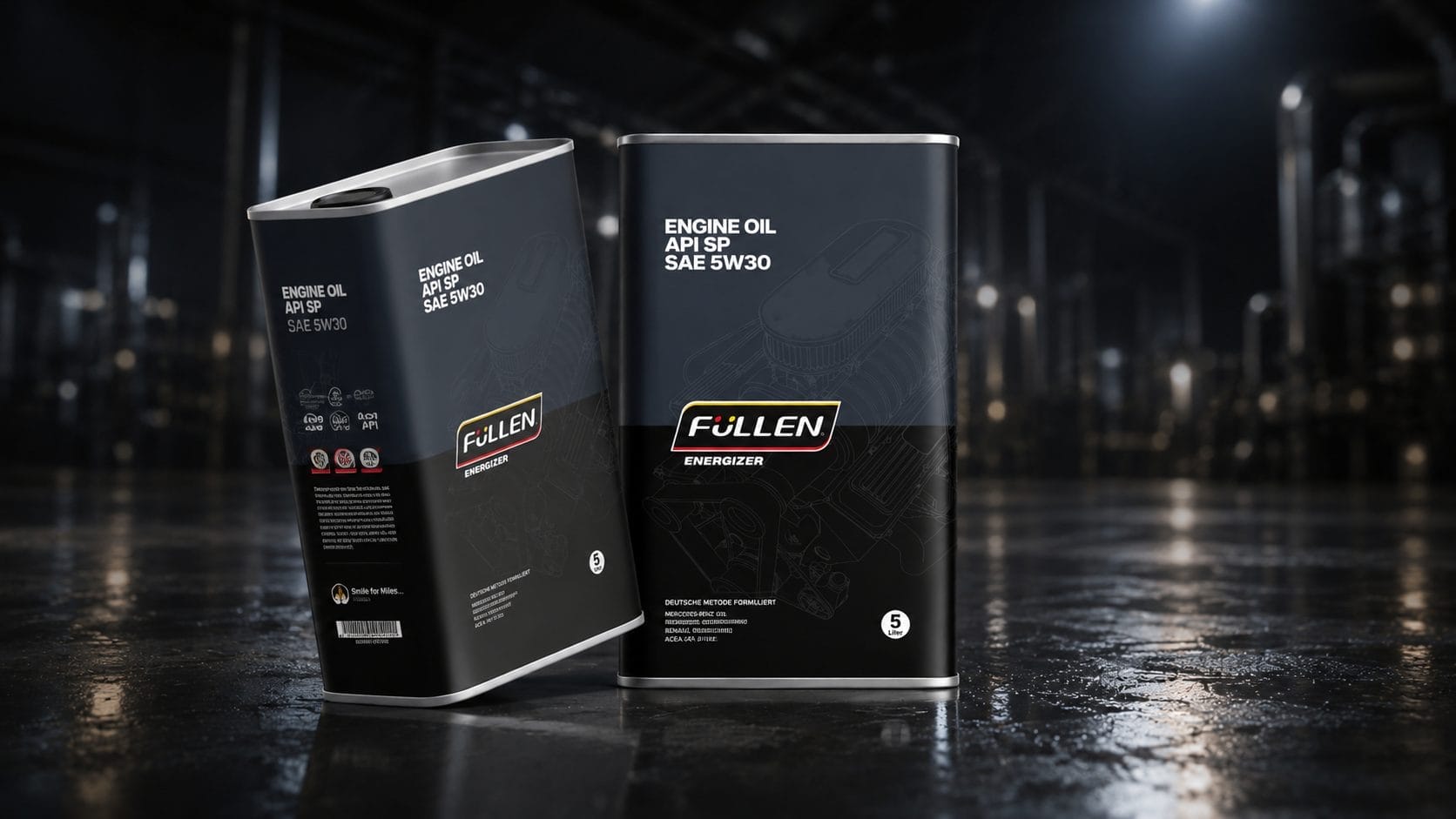
There is a moment every chemical manufacturer eventually faces: a distributor in Germany requests your logo, a packaging supplier in Turkey needs your brand colors, and a trade show contractor asks for your typography, all in the same week, all with different deadlines. Without a brand book for chemical manufacturers, each request becomes a small crisis, and each crisis produces a slightly different version of your brand. Over time, those inconsistencies compound into something more damaging than any single design mistake: a brand that looks unreliable before a buyer has ever tested your product. This article explains exactly what a professional brand book contains, how it protects your brand across international markets, and why chemical manufacturers who skip it consistently struggle to scale their visual identity beyond their home market.
Chemical manufacturers are exceptionally good at documentation. Safety data sheets, technical specifications, compliance certificates, formulation records: the industry runs on precision paperwork. Yet when it comes to brand identity, that same discipline disappears. Most chemical companies operate for years without a single document that defines how their brand should look, sound, or present itself to the world.
This is not a cosmetic problem. It is a structural one.
When a brand has no documented identity system, every external touchpoint becomes a negotiation. Your packaging designer makes one interpretation of your logo. Your distributor’s marketing team makes another. The trade show contractor uses whatever file you sent two years ago. By the time your product reaches a buyer in Rotterdam or Chicago, it may look like three different companies packaged under one name. And in markets where trust is built on visual consistency before a single conversation takes place, that inconsistency is expensive. A brand book, sometimes called a brand guidelines document or visual identity manual, is the solution to this problem. It is not a creative indulgence or a luxury reserved for consumer brands. For chemical manufacturers competing in international markets, it is operational infrastructure.erceived value and trust, especially when buyers are comparing multiple products from different manufacturers.nt.
A brand book is a structured document that defines every visual and communicative element of your brand and establishes rules for how those elements are used. It does not leave interpretation to designers, distributors, or print vendors. It removes ambiguity entirely.
At its most fundamental level, a brand book answers three questions: What does our brand look like? How is it applied? And what is never acceptable? The answers to those questions, documented clearly with examples, become the single source of truth that every supplier, partner, and employee references when they produce anything in your brand’s name. For a chemical manufacturer, this matters at a scale that most brand consultants underestimate. Your brand does not live on one website or one product line. It lives on drums, cans, IBC containers, technical datasheets, exhibition banners, distributor catalogues, and digital platforms: simultaneously, across multiple countries, produced by dozens of different vendors who have never met each other..

Without a brand book, each of those vendors is making independent decisions about your brand. With one, they are all working from the same rulebook, and your brand arrives in every market looking like it was produced by a single, precise, professional organization.
The chemical industry is not known for emotional purchasing decisions. Buyers evaluate technical performance, regulatory compliance, pricing, and supply reliability. But they also evaluate whether a supplier looks like they have their operation under control. A brand that cannot present itself consistently signals, subconsciously, that other parts of the operation may be equally inconsistent. A brand book eliminates that signal before it can do damage. In Part 2, we will examine exactly what a professional brand book for chemical manufacturers contains, section by section, and why each element serves a specific commercial purpose beyond aesthetics.
Most chemical manufacturers who decide to create a brand book make the same mistake: they ask a designer to put together some guidelines and receive a PDF showing their logo in three sizes and a list of hex codes. That is not a brand book. That is a logo sheet. The difference between the two is the difference between a floor plan and a building: one is a reference, the other is a functional system.
A professional brand book for chemical manufacturers is organized into distinct sections, each serving a specific operational purpose. Understanding what those sections are, and why they exist, helps manufacturers brief designers correctly, evaluate deliverables accurately, and use the final document effectively across their organization.
The logo section goes far beyond showing the primary mark. It defines the full logo family: primary version, horizontal variant, icon-only version, and monochrome alternatives. It specifies minimum size requirements so the logo never appears too small to be legible on a 5-liter can label. It defines clear space rules: the minimum protected area around the logo that no other element may enter. And critically, it shows misuse examples: what happens when someone stretches the logo, places it on a clashing background, or uses an outdated version.
For chemical manufacturers, the logo system must also address industrial printing realities. Screen printing on metal cans, pad printing on plastic containers, and embossing on caps all have different technical requirements. A brand book that ignores these production contexts will produce inconsistent results the moment it leaves the designer’s screen.
A color palette in a brand book is not a list of favorite colors. It is a precision specification. Every primary and secondary brand color must be defined in at least four formats: Pantone for spot printing, CMYK for offset and digital printing, RGB for screen applications, and HEX for web and digital design.

This matters because a brand color that prints correctly on a European offset press may look entirely different when screen-printed on a metal drum in a factory in the Middle East. Without precise specifications across all color systems, your brand color becomes whatever the local vendor’s calibration produces that week. Over years and across markets, this creates a brand that looks faded, inconsistent, or simply unprofessional: not because of poor intent, but because of missing documentation.
Typography rules define which typefaces represent your brand, how they are used in hierarchy, and what substitutes are acceptable when primary fonts are unavailable. For chemical manufacturers, this section must address both premium branded materials and functional operational documents, because the same brand identity that appears on a premium export catalogue also needs to work on a technical datasheet printed in a regional office.
A professional typography system defines primary and secondary typefaces, size relationships between headings and body text, line spacing standards, and language-specific considerations for brands operating across Arabic, Latin, or Cyrillic scripts simultaneously.
This is the section most brand books skip, and the one that makes the entire document usable in practice. Application examples show how the brand identity system applies to real-world formats: packaging labels, metal can designs, letterheads, email signatures, exhibition graphics, and digital banners.
For a chemical manufacturer, these examples are not decorative. They are the bridge between abstract rules and operational reality. A packaging supplier who has never worked with your brand before can look at the application examples and understand immediately what the finished product should look like, without a single back-and-forth email.
A brand book that contains all of these sections does not just protect your identity. It accelerates every production process that touches your brand, reduces revision cycles, and eliminates the cost of correcting vendor mistakes after the fact. In Part 3, we will examine how chemical manufacturers use their brand book strategically in export markets, distributor relationships, and long-term brand equity building.
Having a brand book and using it strategically are two different things. Many manufacturers create the document, file it somewhere on a shared drive, and reference it only when a vendor asks for logo files. That approach recovers some value: at minimum, it produces more consistent logo usage. But it leaves most of the document’s commercial potential untouched.
The manufacturers who extract the most value from their brand book treat it as an active business tool, not a passive archive. They deploy it at specific moments in their commercial operation where brand consistency directly affects revenue, trust, and market positioning.
The moment a chemical manufacturer begins working with a distributor in a new country is one of the highest-risk moments for brand consistency. The distributor has their own designers, their own print vendors, and their own interpretations of what looks professional in their local market. Without a brand book, the manufacturer has no authority to define how their brand appears in that market. With one, the brand book becomes the first document shared in the onboarding process, establishing from day one that brand standards are non-negotiable, regardless of local preferences.
This is not about being rigid. It is about protecting the equity your brand has built in other markets from being diluted by well-intentioned but inconsistent local adaptations. A chemical brand that looks premium in Germany should look equally premium in Saudi Arabia and in Brazil: not because the markets are the same, but because brand reliability transcends geography.

Every time a chemical manufacturer commissions new packaging, whether it is a new product line, a reformulation requiring label updates, or an expansion into a new container format, they brief a designer or a print vendor. Without a brand book, that brief is incomplete by definition. The designer must make assumptions about colors, typography, and logo placement. Those assumptions produce revision cycles. Revision cycles cost time and money.
A brand book transforms the briefing process. Instead of describing what you want in words and hoping the designer interprets correctly, you hand them a document that answers every technical question before it is asked. Experienced industrial packaging designers can often move from brief to accurate first draft in a single round when working from a complete brand book, a process that otherwise takes three or four rounds of corrections.
Brand equity in the chemical industry is built slowly and protected carefully. It accumulates through consistent product performance, reliable supply, and a visual identity that looks the same every time a buyer encounters it. Each consistent touchpoint reinforces the association between your brand’s appearance and the quality it represents. Each inconsistent touchpoint erodes it slightly.
Over five years, a chemical manufacturer with a disciplined brand book produces hundreds of consistent touchpoints across packaging, trade materials, digital presence, and distributor communications. A manufacturer without one produces hundreds of variations. The cumulative difference in perceived brand quality between those two companies is significant, even if their products are technically identical.
This is why the brand book is not a design project. It is a long-term investment in the commercial value of your brand’s name. Every export contract, every distributor relationship, and every premium pricing decision your company makes in the future will be influenced positively or negatively by the consistency of the brand identity you are building today.
Chemical manufacturers who understand this do not ask whether they can afford to invest in a brand book. They ask whether they can afford to keep operating without one.
A brand book does not replace great packaging design, strong product performance, or smart export strategy. It makes all of those things work harder. It is the document that ensures every investment your company makes in its visual identity, every label, every catalogue, every exhibition graphic, compounds over time rather than canceling itself out through inconsistency.
Chemical manufacturers who operate in international markets face a fundamental challenge: their brand must perform without them in the room. When a buyer in the Netherlands encounters your product on a distributor’s shelf, you are not there to explain your quality standards or your company’s history. Your packaging is. When a procurement manager in Canada reviews your catalogue alongside three competitors, you are not there to make your case. Your brand identity is.
A brand book ensures that every time your brand appears without you, which is most of the time, it makes the right impression. It communicates that your operation is precise, your standards are consistent, and your company is the kind of supplier that does not cut corners on the details that are easy to overlook. For chemical manufacturers building toward serious international presence, the brand book is not the finishing touch on a branding project. It is the foundation everything else is built on. The companies that understand this earliest tend to be the ones that look, from the outside, like they have always known exactly who they are: which, in competitive export markets, is one of the most valuable things a brand can project.lue.
A brand book is a document that defines all visual and communicative elements of your brand and establishes rules for their consistent application. Chemical manufacturers need one because their brand appears across multiple countries, vendors, and formats simultaneously, and without documented standards, every application produces a slightly different result that erodes perceived quality over time.
A logo package contains your logo files in various formats. A brand book contains your complete identity system: logo rules, color specifications, typography standards, application examples, and misuse guidelines. A logo package tells vendors what your logo looks like. A brand book tells them exactly how to use it in every context they will encounter.
A professional brand book developed from an existing identity typically takes three to six weeks. If the brand identity itself needs to be created or significantly refined first, the process may take eight to twelve weeks. The timeline depends on the complexity of the product range, the number of application formats required, and the number of revision rounds.
At minimum: logo system with all variants and misuse rules, color specifications in Pantone, CMYK, RGB, and HEX, typography system with hierarchy and substitution rules, and real-world application examples across packaging, print, and digital formats. Advanced brand books also include brand voice guidelines, photography direction, and market-specific adaptation rules.
Absolutely, and arguably more than an established company. Startups that define their brand standards early avoid the costly process of correcting years of inconsistency later. A brand book created at launch ensures that every vendor, partner, and distributor the company works with from day one applies the brand correctly, building equity from the very first touchpoint.
When entering a new market, a brand book becomes the first brand document shared with local distributors and vendors. It establishes non-negotiable standards before local interpretations can dilute the brand’s appearance. This ensures the brand maintains the same premium perception in a new market that it has built in existing ones.
Yes, periodically. Brand books should be reviewed when the company significantly expands its product range, enters new markets with different production requirements, undergoes a brand refresh, or identifies consistent misapplication issues in the field. Annual reviews are a reasonable standard for actively growing manufacturers.
Internally: marketing teams, product managers, and senior leadership. Externally: packaging designers, print vendors, exhibition contractors, digital agencies, distributors, and any third party producing materials in the brand’s name. The document should be accessible to all of them in a controlled, version-managed format.
The costs are distributed and often invisible until they accumulate: reprints due to incorrect color specifications, revision cycles with designers working from incomplete briefs, inconsistent brand appearance across markets that undermines perceived quality, and the long-term erosion of brand equity that comes from hundreds of slightly different brand applications over years of operation.
Ask three vendors who produce materials for your brand to each create a sample using only the brand documentation you currently have. If the three samples look noticeably different from each other, your brand book is insufficient. A complete brand book produces consistent results across independent vendors without requiring correction.
Most chemical manufacturers we work with at Jahanifar Studio come to us after years of managing brand inconsistency the hard way: chasing vendors, correcting reprints, and watching their identity fragment across markets they worked hard to enter. The brand book we build for them does not just solve that problem. It eliminates the category of problem entirely, so their team can focus on growth instead of damage control. If your chemical brand is preparing for export, scaling its distributor network, or simply ready to present itself with the consistency its product quality deserves, we would like to help you build the foundation that makes everything else work.
Explore our work or contact us to start your project at jahanifar.com
Let's discuss your goals and explore the best path forward.