

Modern industrial packaging requires more than attractive visuals. A successful print-ready packaging design must perform accurately throughout the production process while maintaining brand consistency, readability, and manufacturing efficiency. From artwork preparation and color management to typography and prepress quality control, even small technical mistakes can lead to costly production issues. In this guide, we explore the most common packaging design mistakes that affect printing quality, increase production costs, and impact how customers perceive industrial brands.
Many packaging projects look exceptional on a designer’s screen but become disappointing once they reach the production line.
This problem is surprisingly common across industrial sectors.
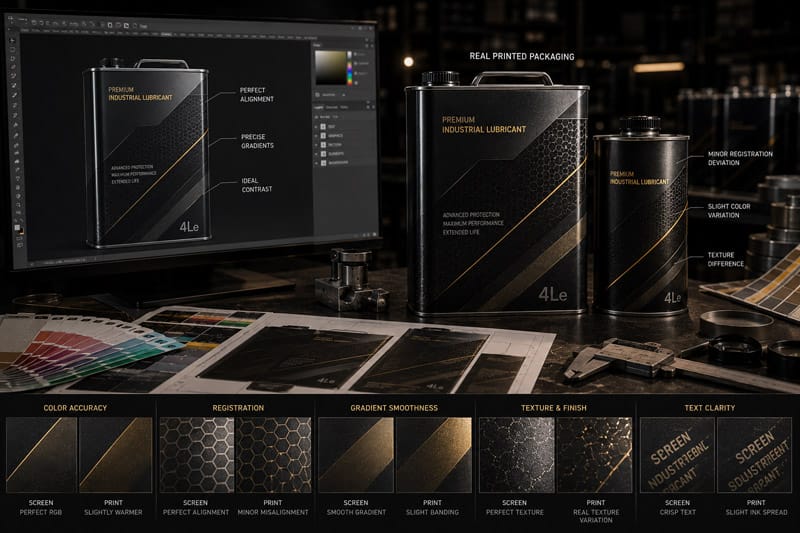
A packaging design may appear visually impressive during the concept stage, receive approval from stakeholders, and even look perfect in digital mockups. Yet when the final product is printed and manufactured, unexpected issues begin to appear.
Colors shift.
Typography loses clarity.
Critical information becomes difficult to read.
Alignment problems emerge.
Production defects become visible.
The result is often a packaging system that fails to deliver the premium perception originally intended.
For industrial brands, these mistakes are more than aesthetic concerns. They can directly impact customer trust, distributor confidence, and product positioning.
Packaging is often the first physical interaction customers have with a brand.
When production quality appears inconsistent, buyers frequently associate those flaws with the product itself.
This is why successful industrial packaging projects require more than strong visual design.
They require production-ready thinking from the very beginning.
One of the most common causes of packaging failure is the disconnect between design decisions and manufacturing realities.
Many designers focus primarily on aesthetics.
Manufacturers focus on production efficiency.
Printers focus on technical execution.
When these disciplines operate independently, problems emerge.
Packaging is unique because it sits at the intersection of all three.
A successful packaging project must satisfy:
Ignoring any one of these factors can create costly revisions later in the process.
For example, a typography treatment that looks elegant on a computer monitor may become unreadable when printed on a curved metal surface.
A dark color palette may appear sophisticated digitally but lose important visual contrast during production.
A design element positioned near a fold line may become distorted after manufacturing.
These issues are rarely caused by poor design talent.
They are usually caused by insufficient production awareness.
As discussed in our article on Metal Can Packaging Design, industrial packaging requires an understanding of how materials, printing systems, and manufacturing processes interact throughout the production lifecycle.
The best packaging projects are developed with production in mind from the first concept stage.
The phrase “print-ready” is frequently used in the packaging industry, but it is often misunderstood.
Many assume that print-ready simply means exporting a design file into a printable format.
In reality, print-ready packaging is far more comprehensive.
A truly production-ready packaging system has been designed, tested, and prepared to perform successfully under real manufacturing conditions.
This includes consideration of:
A print-ready file is not simply a design file.
It is a manufacturing document.
Its purpose is to communicate design intent accurately across multiple production stages while minimizing the risk of costly errors.
Industrial brands that invest in production-ready packaging systems often experience:
These advantages become increasingly important as packaging complexity grows and brands expand into larger domestic and international markets.
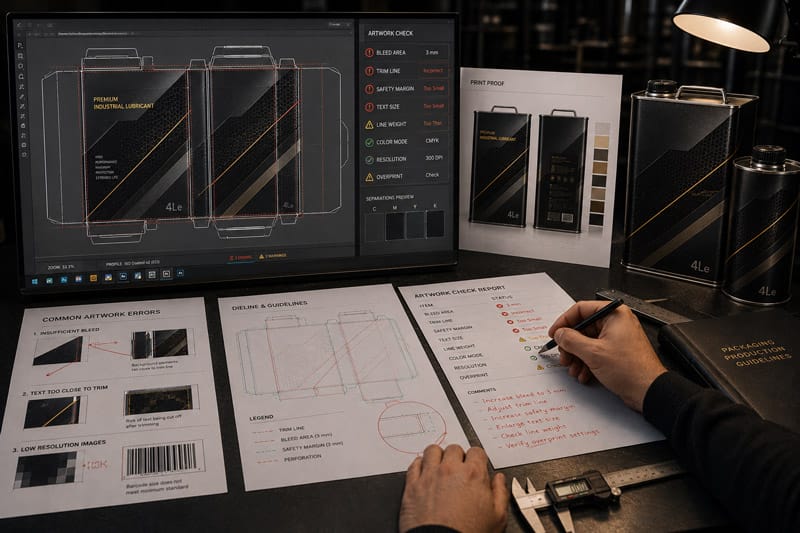
Many packaging failures can be traced back to surprisingly small artwork errors.
A design may appear flawless on a computer screen, yet a minor technical oversight can create significant problems once the project enters production. In industrial packaging, these mistakes often become expensive because they are discovered only after materials, printing plates, or manufacturing resources have already been committed.
One of the most common issues is insufficient safety margins.
Critical information such as product specifications, technical instructions, or regulatory content may be positioned too close to trim lines, folds, or curved surfaces. During manufacturing, slight variations can cause these elements to shift, reducing readability and creating an unprofessional appearance.
Another frequent problem is improper bleed setup.
Without adequate bleed areas, unwanted white edges may appear after trimming, immediately reducing the perceived quality of the packaging.
Industrial brands often invest heavily in product quality, but small artwork mistakes can undermine that investment by making the final product appear less professional than intended.
Color is one of the most powerful branding tools available to industrial companies.
Yet it is also one of the most misunderstood aspects of packaging production.
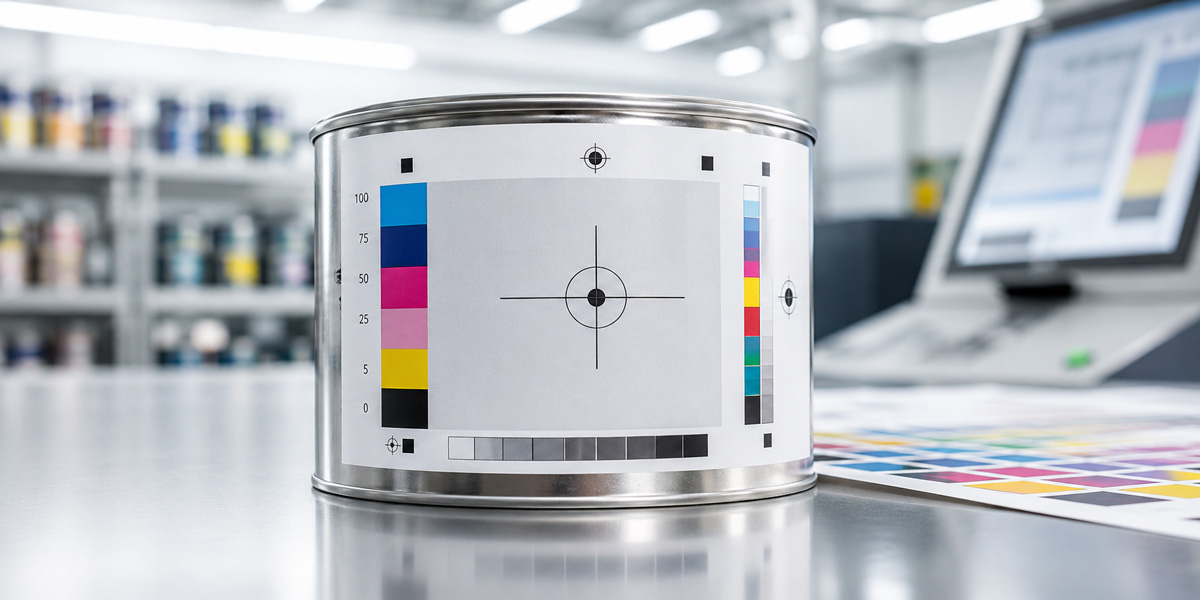
Many businesses approve colors based on digital screens without fully understanding how those colors will behave during commercial printing. Monitors display colors using RGB light, while packaging production typically relies on CMYK printing systems.
The result can be significant visual differences.
Colors that appear vibrant and consistent on screen may print darker, lighter, or less saturated than expected.
This challenge becomes even more important for industrial brands that rely on strong visual identity systems.
A lubricant manufacturer that uses a specific blue across packaging, catalogs, websites, and trade show materials cannot afford noticeable color variation. Consistency reinforces trust, while inconsistency creates doubt.
Professional print-ready packaging design accounts for these realities early in the process by using accurate color management systems, production proofs, and material-specific testing procedures.
The objective is not simply attractive color.
The objective is predictable color.
Packaging production involves multiple technical processes working together.
Even minor registration errors can affect the appearance of typography, logos, graphics, and technical information.
Poor registration often creates:
These issues become particularly noticeable on industrial packaging because buyers often associate packaging precision with manufacturing precision.
A packaging design that appears misaligned may unintentionally communicate poor quality control, even if the product itself performs perfectly.
This is why experienced packaging designers build artwork with realistic production tolerances in mind rather than assuming perfect manufacturing conditions.
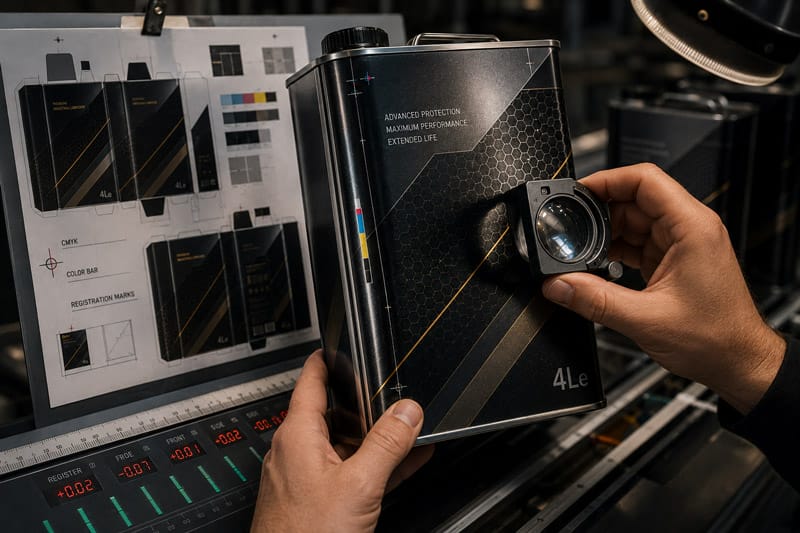
Typography is often treated as a purely visual element.
In reality, typography plays a critical functional role in industrial packaging.
Technical specifications, safety instructions, certifications, product descriptions, and performance claims all depend on clear readability.
Common typography mistakes include:
These issues become amplified during production because printing limitations, material characteristics, and environmental conditions can further reduce readability.
A successful print-ready packaging system treats typography as a communication tool rather than decoration.
The most effective industrial packaging combines strong branding with exceptional clarity, ensuring that every piece of information remains accessible throughout the product lifecycle.
In Part 3, we will explore the technical production challenges that make industrial packaging significantly different from ordinary graphic design projects.
Many companies assume that packaging production is simply the final step after design approval.
In reality, production is where packaging design is truly tested.
A concept may look impressive in presentations and digital mockups, but industrial packaging must survive manufacturing processes, printing limitations, material constraints, transportation conditions, and real-world handling.
This is why industrial packaging projects require more than graphic design expertise.
They require technical production knowledge.
A packaging designer who understands manufacturing can anticipate problems before they become expensive production issues. They understand how materials behave, how colors react during printing, and how packaging structures influence artwork placement.
For industrial brands, this expertise can significantly reduce production costs while improving overall packaging quality.
The difference between an average packaging project and a premium packaging system often comes down to how well production realities are considered during the design process.
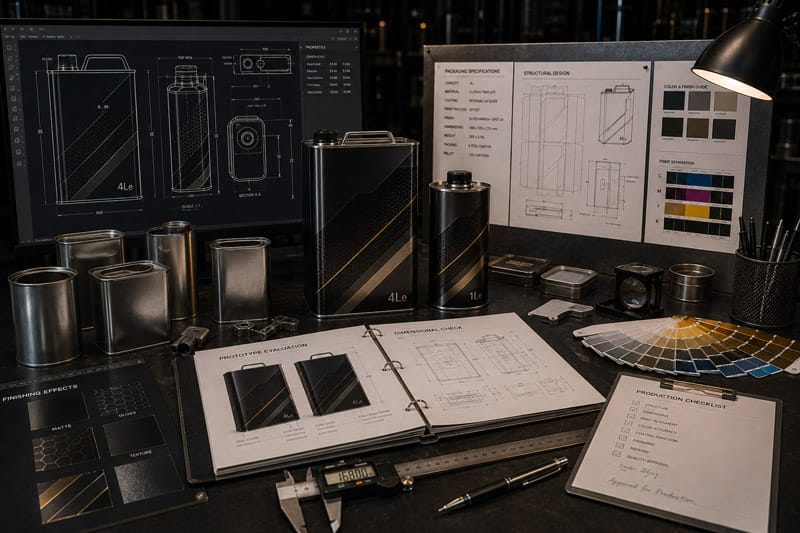
Metal packaging remains one of the most premium packaging formats in industrial markets.
However, printing on metal introduces technical challenges that do not exist with paper-based or flexible packaging materials.
Metal surfaces reflect light differently, react differently to coatings, and can magnify production imperfections that might go unnoticed on other substrates.
Common challenges include:
This is one of the reasons premium lubricant brands continue working with packaging specialists who understand both branding and production.
As discussed in our article Metal Can Packaging Design: Why Premium Industrial Brands Still Prefer Tin Packaging, the packaging material itself influences both perception and print performance.
Successful metal packaging requires careful planning long before the first unit reaches production.
The most expensive mistakes are often created during the design stage, not the manufacturing stage.
One of the most misunderstood aspects of packaging production is the role of dielines.
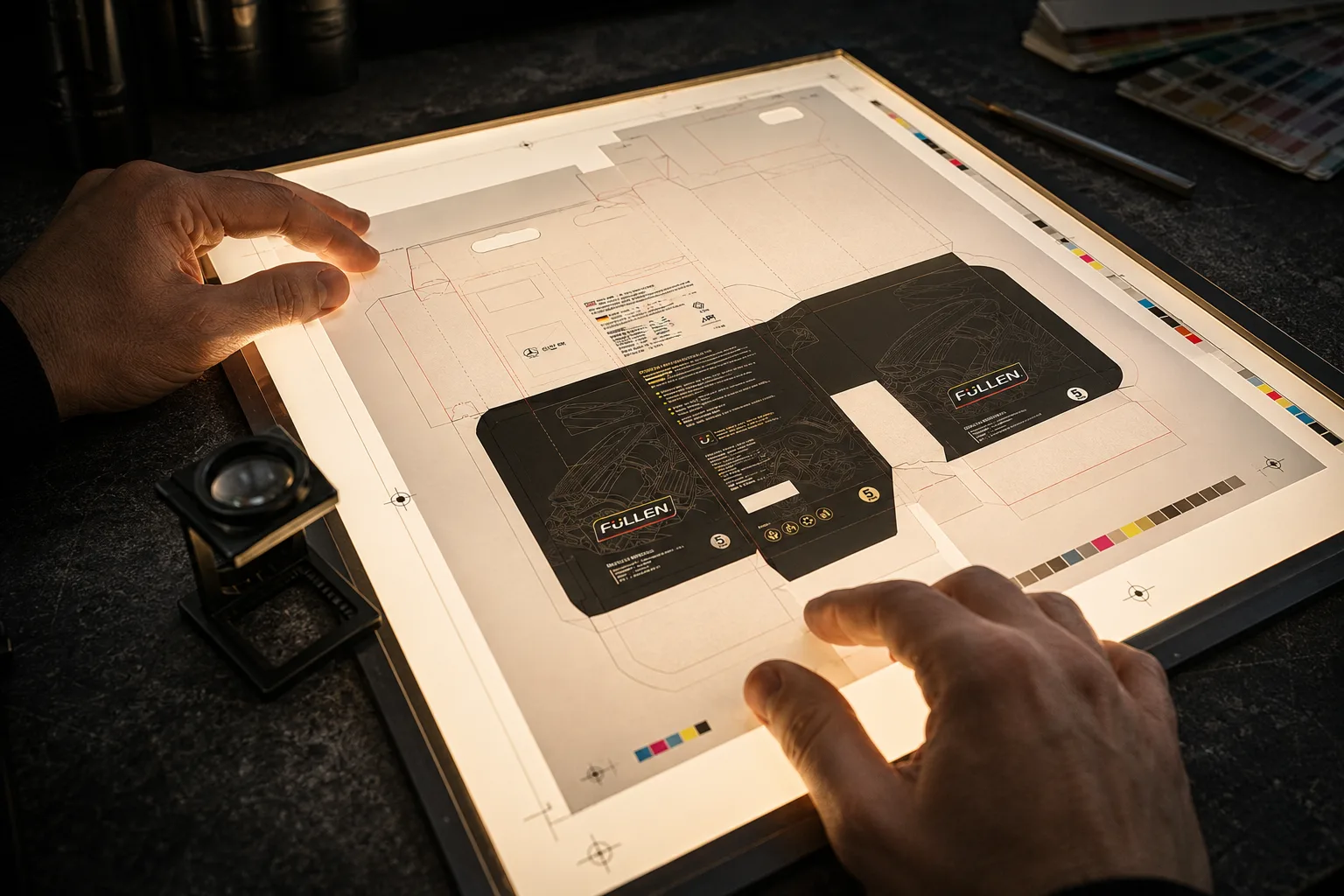
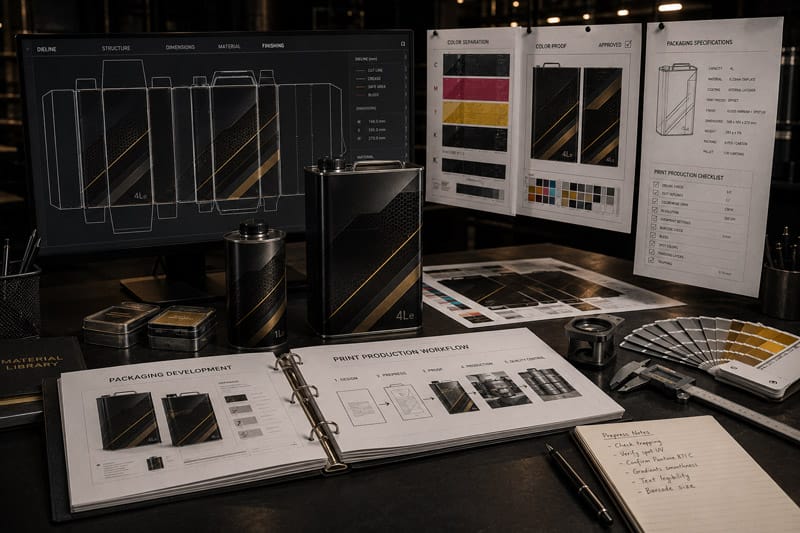
A dieline acts as the structural blueprint for the final package. It defines:
Ignoring these structural constraints can create serious production problems.
For example, critical product information may accidentally be placed near a fold line where readability becomes compromised.
Brand elements may become distorted once packaging is assembled.
Visual balance may change dramatically between flat artwork and the final manufactured package.
Experienced packaging designers treat the dieline as part of the design process rather than a technical requirement added later.
This approach helps ensure that branding remains consistent throughout production and assembly.
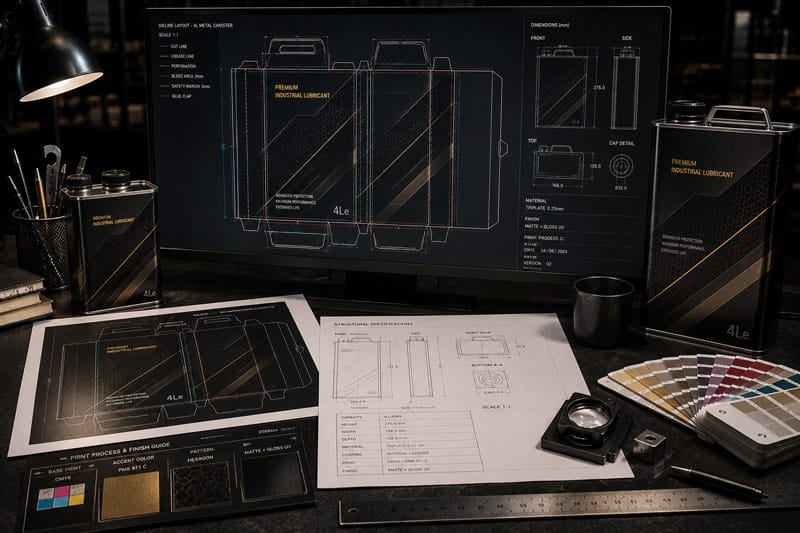
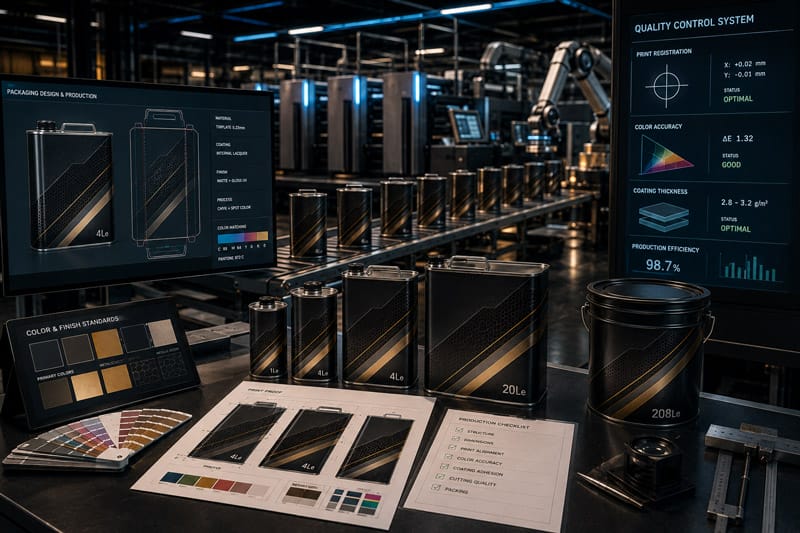
Many companies think quality control begins on the production line.
In reality, effective quality control begins much earlier.
It starts during artwork preparation.
Every decision made before production influences the final outcome.
This includes:
A strong prepress review process helps identify issues before they become manufacturing costs.
Industrial brands that implement structured quality-control procedures during packaging development often experience:
Packaging is often one of the most visible representations of a company’s professionalism.
Because of this, quality control should never be viewed as a final checkpoint.
It should be embedded throughout the entire packaging development process.
In Part 4, we will examine how production-ready packaging systems contribute to long-term brand authority, explore best practices for manufacturers, and answer the most common questions about print-ready packaging design.
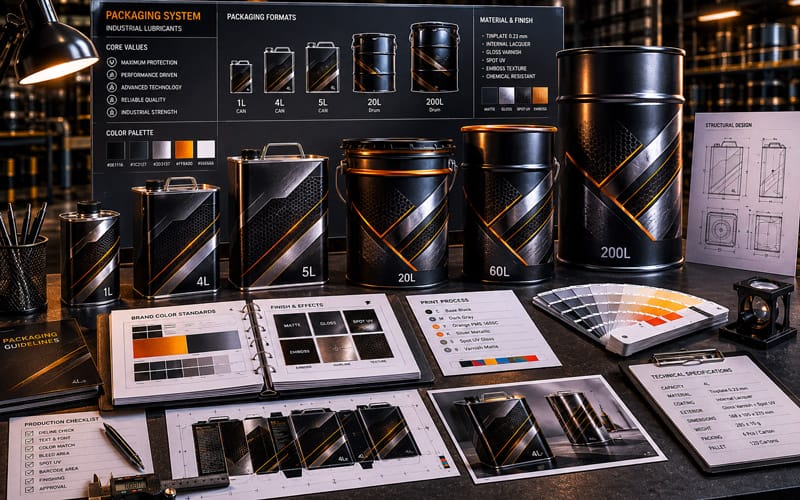
The most successful industrial brands do not treat packaging as a single design project.
They treat it as a system.
A production-ready packaging system is built to perform consistently across multiple product lines, manufacturing batches, printing suppliers, and distribution channels. Rather than solving one packaging challenge at a time, it creates a structured framework that supports long-term growth.
This approach becomes increasingly important as companies expand their product portfolios or enter export markets.
Without clear packaging standards, businesses often experience:
A structured packaging system reduces these risks by establishing clear production guidelines before manufacturing begins.
These guidelines may include:
When properly implemented, production-ready packaging systems improve efficiency while strengthening brand consistency.
The result is a packaging portfolio that looks professional, performs reliably, and supports long-term business objectives.
Many companies invest heavily in marketing while overlooking the production quality that customers experience directly.
Yet packaging often becomes one of the strongest indicators of professionalism.
Distributors notice print quality.
Retailers notice consistency.
Customers notice attention to detail.
Over time, these observations influence how people perceive the brand itself.
Production expertise creates value because it helps businesses avoid mistakes that damage credibility.
When packaging consistently demonstrates:
buyers begin associating those qualities with the company behind the product.
This is particularly important in industrial markets where trust plays a major role in purchasing decisions.
Premium packaging is not simply a visual upgrade.
It is a reputation-building tool.
Companies that invest in production knowledge often achieve stronger long-term positioning because every package reinforces the same message:
“We pay attention to quality.”
As manufacturing technology continues evolving, packaging production is becoming increasingly sophisticated.
Automation, digital proofing systems, advanced color management, and improved printing technologies are reducing production risks while raising customer expectations.
At the same time, global competition is making packaging quality more important than ever.
Industrial buyers have more options.
Distributors have more choices.
Export markets have higher standards.
This means packaging must perform at a higher level than it did in previous decades.
Future-ready packaging systems will combine:
The brands that succeed will be those that view packaging as a strategic business asset rather than a purely creative exercise.
Because in modern industrial markets, packaging quality often becomes a visible reflection of operational quality.
A successful print-ready packaging design does far more than look attractive on a computer screen.
It must perform reliably throughout every stage of production, manufacturing, transportation, and customer interaction.
From artwork preparation and color management to dielines, typography, and quality control, even small technical decisions can have a major impact on final packaging quality.
Industrial brands that understand these realities gain a significant advantage.
They reduce costly production errors.
Furthermore, brand consistency becomes easier to maintain across multiple product lines.
Customers also benefit from a more professional and reliable packaging experience.
Most importantly, these improvements help build trust through packaging that reflects professionalism and manufacturing confidence.
Most importantly, they build trust through packaging that reflects professionalism and manufacturing confidence.
In competitive industrial markets, production-ready packaging is not merely a technical requirement.
It is a strategic investment in brand value.
Print-ready packaging design refers to packaging artwork that has been fully prepared for commercial production, including color management, bleed settings, typography checks, and technical specifications.
Most failures occur because production requirements were not considered during the design phase, leading to issues such as color shifts, alignment errors, and structural conflicts.
Design-ready packaging focuses on appearance, while print-ready packaging is optimized for actual manufacturing and printing conditions.
Dielines define the structural layout of packaging and help ensure artwork is positioned correctly during manufacturing.
Proper color management ensures that brand colors remain consistent across different production runs and packaging formats.
Common mistakes include insufficient bleed, poor safety margins, incorrect color settings, low-resolution graphics, and typography readability issues.
Typography communicates technical information, product specifications, and safety instructions, making readability essential.
Prepress identifies and corrects technical issues before printing begins, reducing production risks and costs.
By implementing structured quality-control processes, conducting proof reviews, and working with experienced packaging specialists.
Because it improves production efficiency, protects brand consistency, reduces costly revisions, and strengthens customer trust.
At Jahanifar Studio, we develop packaging systems that combine strategic branding, technical production expertise, and real-world manufacturing knowledge.
From lubricant packaging and metal can printing to production-ready artwork and industrial brand systems, our goal is to create packaging that performs successfully in both the marketplace and the production line.
Explore our work and discover how production-ready packaging can strengthen your brand, reduce manufacturing risks, and support long-term business growth.
Let's discuss your goals and explore the best path forward.